

Frequently Asked Questions
FAQAll functions including supply chain, value chain, project scheduling, manufacturing, services and spares, technology, R&D, etc. are integrated to give a complete solutions package.
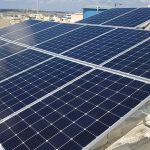
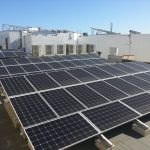
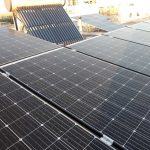
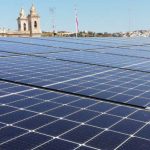
PV Solar Panels (Modules)
1.What exactly are photovoltaic panels?
2.What do I require to generate solar power?
3.What is solar power system?
4.What is a solar power panel?
5.What is the useful life of solar power systems?
6.Is there a guarantee?
7.Does my roof support the installation of a solar power system?
8.Do the PV panels require any maintenance?
9.Should I insure my PV system?
Insurance on your PV system is highly recommended and you need to contact your insurance provider
Micro-Inverter
What is the difference between a micro-inverter and an optimiser?
Microinverters convert DC energy into AC energy right at the panel site. While power optimizers don't convert the electricity on their own; instead, optimizers condition the DC energy and send it to a central inverter that finishes the conversion process.
Heat Pumps
1.What is the difference between a heat pump and a solar water heater?
Solar water heater is installed on a roof and contains copper tubes which collect water, heat it in sunlight, and send it to a water storage tank.
Unlike the large PV solar panel systems, solar thermal panels contain only one panel and can only heat water; they can’t power anything else.
Like your air conditioner and fridge, a hot water heat pump pulls heat out of the surrounding air. It then uses electricity to move that heat into the water tank.
Unlike conventional electric-resistive systems, hot water heat pumps merely move heat from one place (air) to another (water); they use no energy to create new heat.
Due to this efficient process, every unit of energy that goes into a heat pump yields three units of energy.
Thus, while conventional electric systems are lucky to achieve 100% efficiency (you get out as much energy as you put in), the average heat pumps provides 300% efficiency.
You also do not need a roof to install this system
2.Do I need a roof for a Water Heat Pump?
3.Does the unit consume electricity?
4.What is the highest temperature that can be reached by the unit?
5.This system is intended as a back-up system or a complete replacement?
Energy Storage
1.What is energy storage
A battery storage system stores unutilized energy generated from your solar panel system. In this way, the energy generated during the day is never lost and can be stored in the battery and utilized at night or when the electricity goes out
2.How does it work?
When battery storage is coupled with an inverter, the inverter converts direct current electricity generated by the solar panels into alternating electricity (which is used in most home appliances). The battery then stores the excess electricity generated and stores it. Our batteries:
– Monitor the energy generated by your solar panel system in in real-time
– Monitor the energy stored in the battery.
– Monitor your residential consumption
– Obtain real-time information on what energy you save in the battery and what energy is consumed from the stored energy within the battery.
During the day, solar panels generate electricity, which can first be used to power you home. After which. any excess energy which is not immediately used, is directed to charge the battery. Once the battery is fully charged, any additional surplus may be fed back into the grid or can be used at night or during periods when solar panels aren’t producing enough electricity, ensuring a continuous power supply.
For more information visit read our blog post Invest in Solar Battery Storage and avoid electricity outage!


Request A Quote On (+356) 21480 0500 Ext. 118